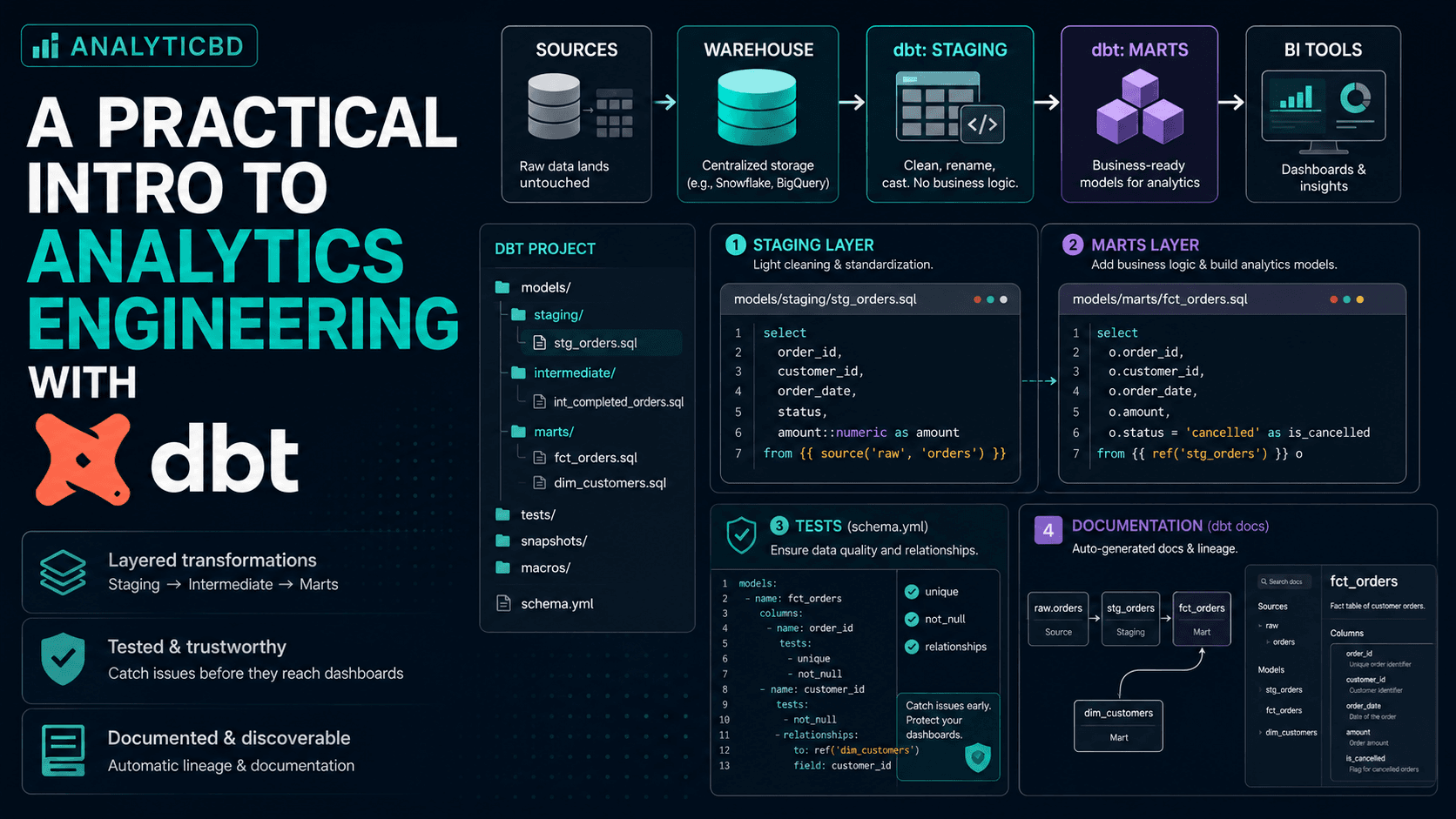
A Practical Intro to Analytics Engineering with dbt
What dbt actually does and why teams adopt it: the staging, intermediate, and marts layering pattern, a worked model, and how tests and docs turn raw SQL into a trustworthy product.
Tag

What dbt actually does and why teams adopt it: the staging, intermediate, and marts layering pattern, a worked model, and how tests and docs turn raw SQL into a trustworthy product.
The same formula written two ways behaves completely differently. Row context versus filter context, why averaging a margin column is wrong, the memory cost of stored columns, and a one-sentence rule for choosing correctly.
When a sales rep changes team, should last quarter's numbers move with them? That question decides your dimension design. Type 1 versus Type 2 in plain terms, the join mistake that silently loses rows, and how dbt snapshots handle it.
Fan-out is the most dangerous bug in analytics because it makes numbers look bigger, not smaller. What grain means, how a join silently changes it, the four ways to fix double counting, and the two checks that catch it in seconds.
Most dbt test suites are green and catch nothing. The four generic tests that earn their place, how to assert your model's grain, writing business-specific tests for reconciliation and freshness, and using severity so people keep paying attention.
Column cardinality, not row count, drives Power BI model size. How VertiPaq compression works, why one wide table fights it, how to restructure into a star schema, and which columns to attack first using DAX Studio.